What Actually Happens During a Full Re-Roof, Start to Finish
From the first tarp on the flower beds to the last pass of the magnetic roller, here is what a full re-roof actually looks like.
September 3, 2026 · 3 min read
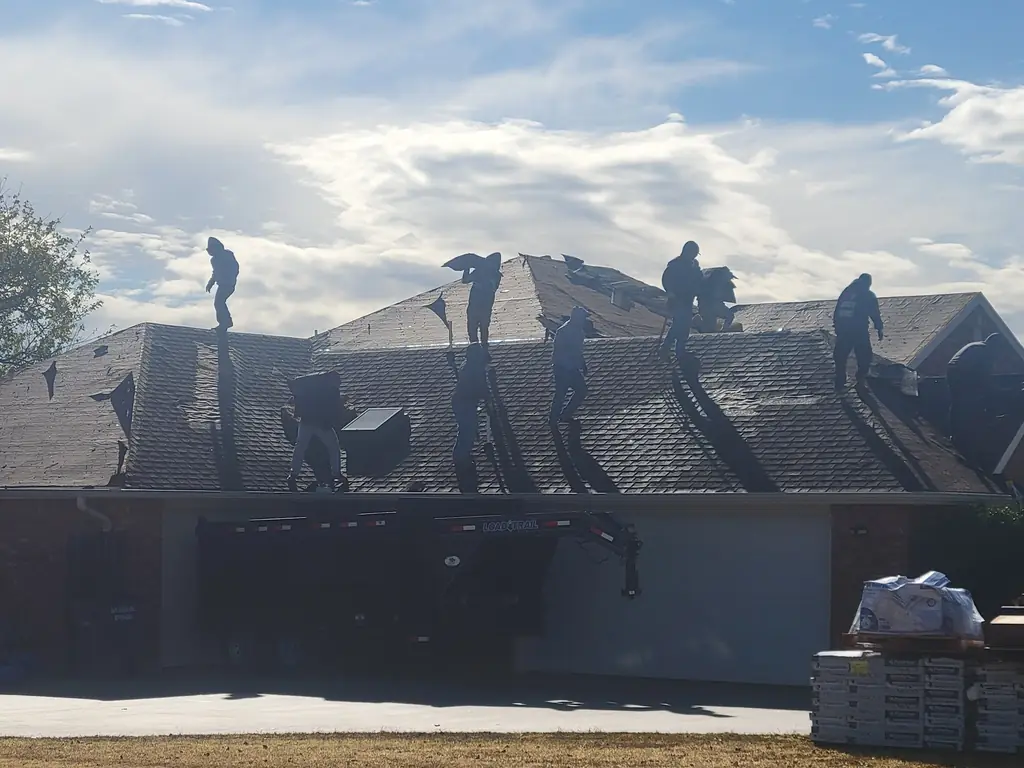
Before the crew ever gets on the roof
A re-roof looks like it starts with a crew climbing a ladder, but the real first step happens on the ground. Tarps go down over the flower beds and anything under the eaves, a dump trailer gets staged close to the house so old material doesn't have to be carried far, and shingle pallets get delivered and stacked on the driveway ahead of time so the crew isn't waiting on a delivery mid-job. None of that is glamorous, but it's the difference between a job site that stays organized and one that turns into a mess by lunchtime.
Tear-off: the fastest, loudest part of the day
This is where a full crew earns its keep. Old shingles, old felt, and any damaged flashing come off down to bare decking, slope by slope, with the crew working in a coordinated line rather than everyone tearing at random spots. On a typical residential roof in good weather, a full crew can strip an entire house in a matter of hours, which is part of why a full re-roof on an average home can realistically wrap in a single day.
The decking check nobody sees coming
Once the shingles are off, the plywood or OSB decking underneath is finally visible, and this is the point where a job can change scope. Most of the deck is usually fine. But wherever water has been getting past old flashing or a cracked shingle for a while, the decking underneath softens, and soft decking has to come out and get replaced before anything new goes down on top of it. Skipping that step to save money is exactly how a new roof ends up with a soft spot a year later.
- A ridge line that looks slightly wavy from the street
- A spot on the roof that feels spongy underfoot, which is a job for a roofer, not a homeowner
- A stain, or worse a soft patch, on a ceiling directly below a roof valley
- A musty smell in the attic near one specific spot rather than the whole space
Underlayment and valleys: the part that actually stops leaks
With the decking sound, the crew runs synthetic underlayment in courses across each slope, overlapping it the way shingles overlap, so water always has a path down and off rather than a seam to get under. Valleys, where two slopes meet and water concentrates hard during a heavy Oklahoma downpour, get extra attention here since that's the single most common place a rushed re-roof ends up leaking.
Weather windows matter more than people think
Tear-off day only happens when the forecast cooperates. Once shingles come off, the decking is exposed until synthetic underlayment goes down, so a crew watching for a dry window isn't being cautious for no reason. A rushed tear-off on a day that turns out rainy can do more damage to a house than the storm that made the re-roof necessary in the first place, which is why a good crew will move the schedule rather than gamble on the sky.
New shingles, and why the order matters
Shingles go on starting at the eave with a starter course, working up the slope in rows, with the ridge caps going on dead last. That order isn't arbitrary. Each row overlaps the one below it, so water moving down the roof is always running over a shingle edge, never into a seam. Get the order wrong and you get a roof that looks finished from the ground but leaks the first time wind drives rain sideways into a poorly lapped joint.
The last twenty minutes: cleanup and the magnet sweep
A roof job leaves behind a surprising number of loose nails, and a stray one in a driveway or under a bare foot in the yard is a bad way to end a good job. A magnetic roller sweep across the yard, driveway, and any parking area picks up what fell during tear-off and install, and a final walk-around with the homeowner closes out the day. Reviews of our own crews mention a full roof going up in a single day and a team showing up on a weekend for an active leak, which lines up with how a well-run tear-off and re-roof is actually supposed to go when the weather cooperates and the decking underneath is sound.
If you're staring down a re-roof and want to know what your own timeline and scope would realistically look like, call (405) 334-9475 and get a straight answer before the work starts, not after.
Grand Roofing Company LLC — (405) 334-9475
Call (405) 334-9475More articles
Hail Damage or Just Wear? What to Check Before You Call Anyone
A straightforward look at what hail actually does to a shingle roof, and how to document it properly before anyone climbs a ladder.
Class 3 vs Class 4 Shingles: What the Rating Actually Means for Your Insurance
The difference between Class 3 and Class 4 shingles comes down to one steel-ball test, and it can show up on your insurance bill.